Back to all
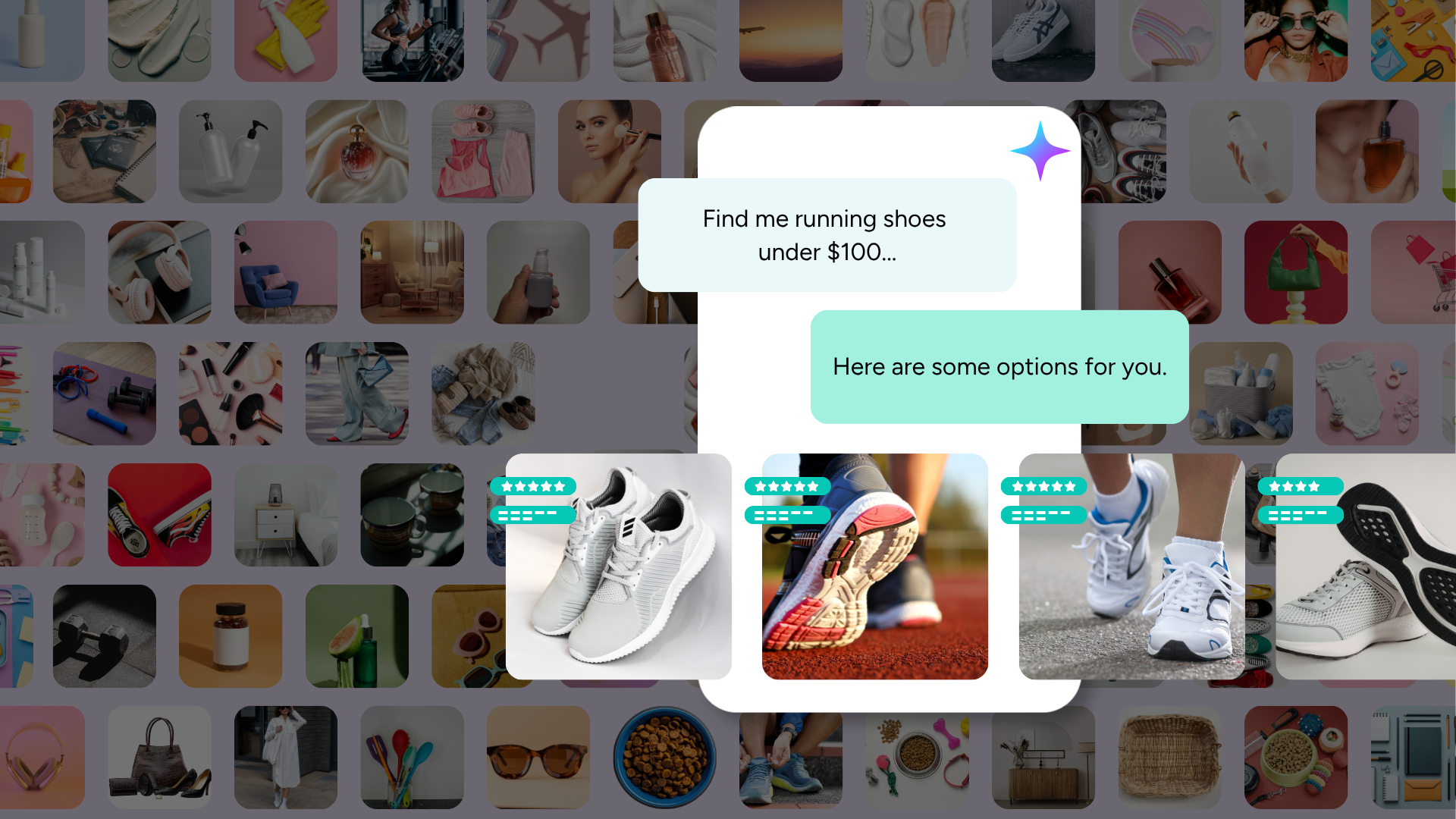

The 2026 selling season is about to look very different. We’re at peak adoption of consumers using LLMs, like ChatGPT, Copilot, Gemini, and Perplexity, to shop. Because of this, the consumer journey and path to conversion are now more complex. The trust consumers place in LLM responses to their shopping prompts is surprisingly high, with most shoppers relying entirely on the AI to shape the decision all the way to purchase.
95% of shoppers who get a product recommendation from an LLM won’t visit a brand or retailer website to verify it. Among 18–27 year olds, 64% buy on the recommendation alone.
Twelve months ago, most brands were still focused on ranking in traditional search results. Consumer shopping behavior has changed more in the last 12 months than in the previous five years combined. That shift is going to define how every peak event plays out in 2026.
Amazon and Walmart are blocking LLMs from crawling their product data. So, keeping consumers within the Amazon ecosystem to maximize Prime Day returns and overall conversions is critical. 52% of all U.S. consumers still begin their online product searches directly on Amazon,¹ which is reassuring for Prime Day activity. But when we factor in the LLM component, our strategy to maximize Prime returns gets more nuanced.
Previously, we wouldn’t have as heavily considered our clients’ .com websites as part of the Prime Day journey, but if LLM recommendations are relying on Google and other general product data feeds, then ensuring product data hygiene from those outside sources is critical.
How should brands reach shoppers on Amazon and LLMs at the same time?
- For consumers already starting their journey in Amazon search, keep them engaged, targeted with appropriate content and ads, and slam dunk the conversion.
- For consumers starting their search in LLMs, make sure client .com product data feeds are accurate, updated, and organized so the right recommendations entice consumers to seek out the shopping moment outside the LLM.
There’s more to this year’s approach. Prime Day lands June 23–26 this year, the earliest window since 2021 and the second year at four full days.¹
Back-to-school demand is already overlapping with it. BFCM is less than six months out. And the LLMs shoppers are using to find and compare products have improved significantly since last peak season.
LLMs are pulling richer product details, making more accurate comparisons, and starting to support transactions directly. The brands and retailers who will perform best during peak 2026 are the ones whose catalogs are accurate, structured, and available everywhere the AI is looking.
At Rithum, we work across 900+ channels with brands and retailers preparing for these events right now. We’re deep in the planning alongside them, from media strategy to product data to channel prioritization, and everything below reflects what we’re seeing and recommending heading into peak selling in 2026.
What are the major 2026 peak sales events, and when do they happen?
- Amazon Prime Day: June 23–26¹
- Back-to-school: May through September (peaks during and after Prime Day)
- Labor Day: September 1
- Amazon Prime Big Deal Days: October (dates TBD; October 7–8 in 2025)
- Singles’ Day: November 11
- Black Friday: November 27
- Cyber Monday: November 30
Beyond the timeline, two things connect every event on this list: AI is reshaping how shoppers discover products, and the brands with accurate, structured data across channels will capture more demand than those without it.
How should brands prepare for Amazon Prime Day in June 2026?
Prime Day runs June 23–26 across 35 categories, with deals dropping three times daily and new inventory going live every five minutes during peak hours.¹ Amazon is putting particular emphasis on fresh groceries and household essentials, building on 4 billion grocery and essentials items delivered via same-day delivery over the past year.²
Last year’s Prime Day (July 8–11) generated $24.1 billion in U.S. online spend, up 30.3% year over year.³ Four of the top five items sold were household or grocery products.⁴ School supplies rose 175% and dorm essentials 84%.³
Across our own client base, the four-day format shifted buying patterns. Shoppers browsed Days 1 and 2, then converted late, with Day 4 GMV jumping 38% year over year.
One Rithum client pivoted mid-event to back-to-school bundles and optimized product titles on Day 2. That shift drove a 15% sales lift over the prior year. The teams that adjusted in real time outperformed the ones that set a plan and left it. And that was before AI was deeply embedded in the Prime Day experience.
What role does Alexa AI play in Prime Day 2026?
This year, Alexa for Shopping (formerly Rufus) will sit directly in the Amazon search bar, search results, and product detail pages for every U.S. customer.¹ Amazon has told sellers that Alexa pulls from listing content to answer shopper questions and make recommendations. If your product attributes are incomplete, Alexa will recommend someone else’s.
During Prime Day 2025, shoppers who engaged Rufus were 60% more likely to complete a purchase. Alexa now helps shoppers build personalized deal guides, set price alerts, trigger auto-buy at target prices, and review 365-day price history. Every one of those features pulls from your product data. If your titles, descriptions, and images aren’t accurate, you’re not showing up in those conversations.
Rithum’s retail media advertising connects spend to product performance across Amazon, Walmart, and Target so you can shift budgets while the event is live. Marketplace listings keep data accurate across 900+ channels so you can coordinate pricing, inventory, and promotions across Amazon and every channel competing for the same shopper during Prime Day. And inventory management prevents oversells and stockouts during the exact hours demand spikes.
How does AI shopping change peak season strategy in 2026?
When AI gets product information wrong, 58% of shoppers lose trust in the brand itself, not the AI tool that served it. And shoppers aren’t loyal to a single AI platform either: ChatGPT’s daily active user share has fallen steadily since early 2025, Gemini has more than doubled its share in the same period, and 20% of AI users now regularly use two or more chatbot apps. Brands that only optimize for one platform are leaving reach on the table.
The shopping capabilities on these platforms have also matured. Perplexity offers one-click checkout through Buy with Pro and PayPal integration across thousands of merchants. Gemini supports agentic checkout through Google Pay, including auto-buy when a price target is met.
ChatGPT launched native shopping features in late 2025. These are live commerce channels, and every one of them relies on structured product data to generate accurate recommendations.
We built ChatGPT and Perplexity Feeds for this: product data compiled, optimized for LLMs, and delivered for ingestion so your brand controls how it appears in AI recommendations. Our upcoming GEO (generative engine optimization) pilot provides a way to track how products appear, move, and compare within AI-driven results. Rithum and Stripe are also building the commerce infrastructure for transactions that happen inside the AI conversation itself.
The path from catalog accuracy to LLM delivery to in-conversation purchase is what determines whether your products get recommended during peak season. Every step depends on the one before it, and most brands are still missing at least one.
How early does back-to-school shopping start in 2026, and what should sellers prioritize?
Back-to-school retail is projected at $85.42 billion in 2026, up 3.3% year over year.⁵ 67% of families started buying by early July 2025, up from 55% the year before. With Prime Day now in June and school supplies already among its top-performing categories (up 175% during Prime Day 2025³), back-to-school effectively starts during Prime Day.
84% of parents say prices are too high. 82% are prioritizing value over brand. But 80% still say buying the specific products their child wants is important.⁵ Parents are cutting back on clothing and switching to store brands in some categories while spending full price in others. Brands that understand which of their products fall into which bucket can plan promotions accordingly.
We recommend spreading promotions across May through September rather than concentrating spend in a single burst. Rithum’s product catalog feeds push near-real-time updates to price, stock, and product data across every channel where shoppers and AI agents are looking. For brands selling across multiple regions, automatic localization for language, currency, and regional specs keeps listings accurate without rebuilding feeds from scratch.
What should brands plan for across Q4 2026 peak events?
September through November packs five major sales events into 90 days, and performance in each one can help shape the strategy for the next.
Labor Day (September 1) — The last major sales moment before Q4 takes over.
Brands use it to move seasonal stock in a smart way. They set pricing rules based on demand signals, not flat markdowns. This helps them carry less dead stock into the holiday rush.
Rithum automates promotional updates across marketplaces. Order management routes to the best fulfillment location based on your rules.
Prime Big Deal Days (October) — Amazon’s separate October event, distinct from summer Prime Day.
The 2025 event (October 7–8) outperformed the prior year globally.³ Shoppers complete holiday purchases here, and the performance data directly informs Q4 decisions. Brands that connected product feeds to LLM platforms earlier in the year will have compounding advantages by October.
Singles’ Day (November 11) — $202 billion across major Chinese platforms in 2024, making it the largest single shopping event globally.³
The event continues to expand into Southeast Asia, where Chinese ecommerce players now account for up to 50% of B2C GMV in key markets. U.S. and European retailers saw an 11% year-over-year lift in influenced revenue last November. Rithum supports 600+ global marketplaces with built-in localization and dedicated account strategists across EU, US, and APAC.
How should brands prepare for Black Friday and Cyber Monday 2026?
Black Friday (November 27) and Cyber Monday (November 30) — BFCM 2024 delivered $10.8 billion (Black Friday) and a record $14.3 billion (Cyber Monday 2025).³
Promotions started climbing November 16 last year, nearly two weeks early. Mobile drove 56% of online holiday spend last season.³ AI-assisted shopping volume, which surged during Prime Day 2025, will be even higher by November as more consumers adopt LLM-based product discovery.
During BFCM 2025, we advised clients to spread budgets from October through December. Clients increased spending by only 3% on average and still hit efficiency goals with a 1.7 advertising cost of sales. Here’s how those Prime Day lessons apply to holiday planning.
Across all of these events, the operational requirements are the same: accurate product data everywhere you sell, budgets that can move in real time, and listings that don’t break under pressure. Rithum’s product catalog feeds deliver data to every channel and AI platform in the right format. Paid search and shopping ads optimize across Google, Microsoft, and Meta with feed-level precision. And marketplace listings catches broken or non-compliant listings before they cost you revenue during the highest-traffic weeks of the year.
How do you prepare for peak season across 900+ channels at once?
Our 2026 Commerce Readiness Index found that 43% of retailers and 37% of brands are prioritizing AI enablement across operations. The best teams have one thing in common at their busiest times. Product data, ad spend, inventory, and fulfillment all run in a single connected system. When something changes mid-event, they can act right away.
Rithum brings all of that into one platform across 900+ channels and AI platforms. If you’re planning for peak 2026 and want to talk through your approach, our team is here.
Talk to our teamFootnotes
¹ Amazon Press Release, “Mark Your Calendars: Amazon Announces Prime Day Event from June 23–26,” June 2026. press.aboutamazon.com
² Forbes, “Amazon Prime Day 2026 Moves to June—This Time With Alexa AI Powering the Cart,” June 2026. forbes.com
³ Adobe Analytics, various reports including “Prime Day Event Drove $24 Billion in Online Spend Across U.S. Retailers” (July 2025), Black Friday 2024, Cyber Monday 2025, holiday season 2025, and Singles’ Day data. business.adobe.com
⁴ Numerator, “Amazon Prime Day 2025 First Half Results,” July 2025
⁵ MRI-Simmons, “Back-to-School Shopping Trends of the 2026 Season,” May 2026. mrisimmons.com | Accio, “Back-to-School Trends 2026.” accio.com